
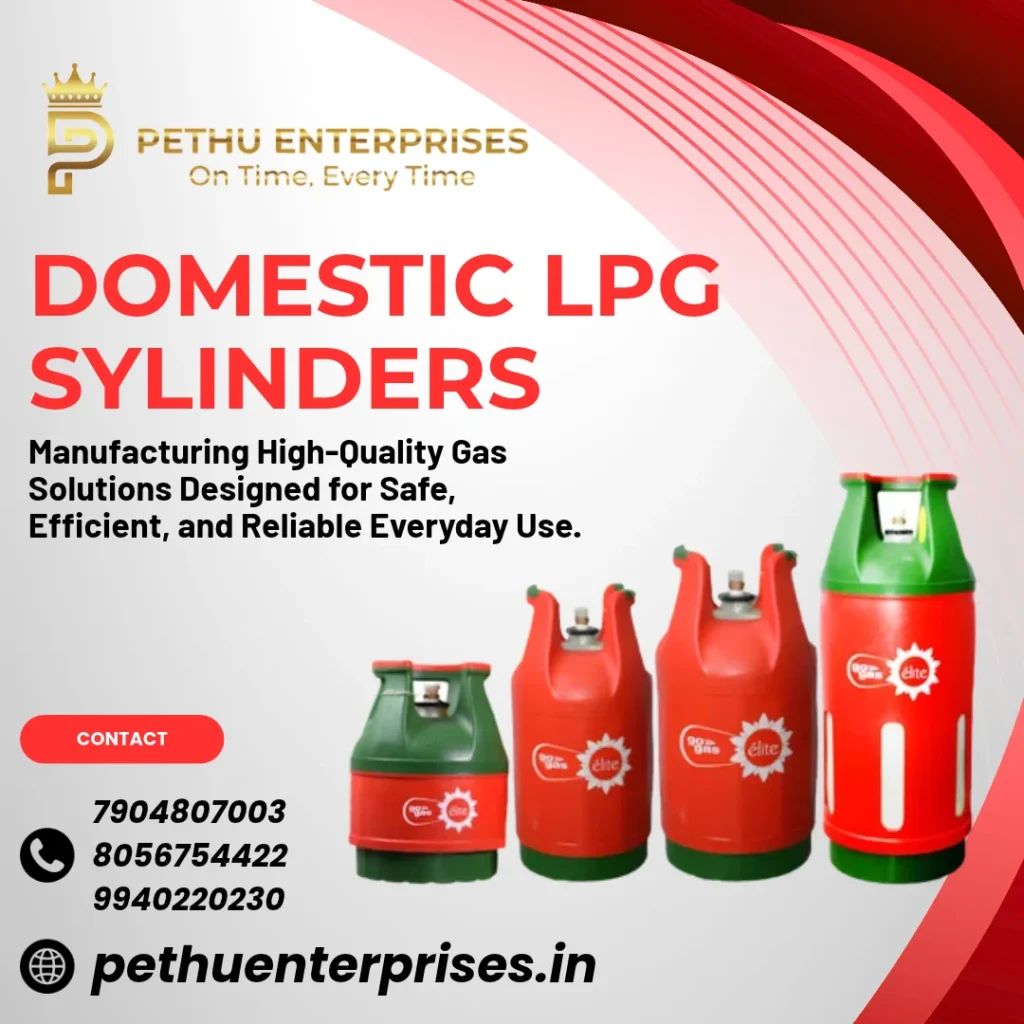
Domestic LPG Cylinders Suppliers – Pethu Enterprises
Liquefied Petroleum Gas (LPG) is widely used for cooking in homes and other permitted establishments. It offers convenient fuel storage and controlled usage when handled with approved equipment and proper safety practices. Choosing a suitable supplier matters because customers need cylinders and related services that comply with applicable safety and regulatory requirements. When searching for Domestic LPG Cylinders Suppliers, customers should prioritise authorised supply channels, cylinder condition and safe handling guidance.
Pethu Enterprises is a business customers can approach to discuss LPG-related requirements. Before choosing a supplier, it is useful to understand how domestic LPG cylinders work, where they are used and what to check before accepting a delivery.
Understanding Domestic LPG Cylinders
Domestic LPG cylinders store liquefied petroleum gas under pressure. When gas is released through a compatible regulator, it changes into vapour and flows to the cooking appliance through an approved hose. A typical setup includes the cylinder, valve, regulator, hose and stove. Every component must be suitable for the system and used according to the instructions provided by the authorised distributor.
LPG cylinders are pressure vessels. Their manufacture, testing, filling, transportation and supply must follow applicable standards and regulations. Customers should never try to refill, modify or repair a cylinder themselves. Any inspection or technical work should be handled by authorised personnel.
Why Choosing the Right Supplier Matters
LPG is a convenient everyday fuel, but it must be supplied and handled responsibly. A suitable supplier can guide customers through the correct booking, delivery and replacement procedures and explain the applicable safety requirements.
When comparing Domestic LPG Cylinders Suppliers, verify whether the supplier is authorised to provide the specific LPG product or service. Check that the cylinder has the required markings and an intact seal, and ask about the relevant documentation and customer support process. Customers should also know whom to contact if they notice a damaged cylinder, broken seal, unusual smell or faulty connection.
Clear communication about delivery procedures and safety guidance can make the supply experience more straightforward. It is important to select Domestic LPG Cylinders Suppliers based on compliance and reliability rather than price alone.
Common Uses of Domestic LPG
Domestic LPG is mainly used for cooking in residential kitchens. It may also be used in certain small food-service settings where the cylinder category and supply arrangement are permitted. Households use it for daily meal preparation because the flame can be controlled through a compatible appliance.
The cylinder type and supply arrangement must match the intended application and current regulations. Domestic cylinders should not be used for commercial purposes unless the relevant rules and authorised supply arrangements specifically permit it. Customers should explain their intended use when contacting Domestic LPG Cylinders Suppliers, so the appropriate and permitted option can be identified.
Factors to Consider Before Choosing a Supplier
Selecting an LPG supplier should involve more than comparing price or delivery convenience. Consider these points before proceeding:
Authorisation: Verify that the supplier is authorised for the particular LPG activity being offered. Use approved distribution channels.
Cylinder condition: Check the cylinder body, valve area, safety cap and seal at delivery. Do not accept a cylinder that appears damaged or has a broken seal.
Documentation: Confirm that the cylinder and supply arrangement have the required identification and records.
Customer support: Understand how to raise delivery queries and report safety concerns.
Safety guidance: Use approved equipment and seek installation, inspection or repair assistance from authorised technicians.
These checks can help customers assess Domestic LPG Cylinders Suppliers and make an informed choice. A careful selection process is especially important when safety and regulatory compliance are involved.
LPG Cylinder Safety and Handling
Safety must always come first when using LPG. Keep cylinders upright in a well-ventilated place, away from direct heat and ignition sources. Use only an approved regulator and hose that are compatible with the cylinder and appliance.
Follow the leak-checking procedure recommended by the authorised distributor. Never use a flame to check for leaks. If you smell gas, do not operate electrical switches or create sparks. If it is safe, turn off the regulator, open doors and windows, move people away from the area and contact the authorised emergency service or LPG distributor immediately.
Never attempt to repair a cylinder, valve or regulator yourself. Inspection, maintenance and replacement must be carried out by authorised personnel. Following official safety instructions is essential for every household.
Pethu Enterprises and LPG Supply Requirements
Pethu Enterprises can be approached to discuss LPG-related supply requirements. Customers should confirm the exact products, supply arrangements, service locations and relevant authorisations directly with the company before placing an order.
For customers researching Domestic LPG Cylinders Suppliers, discussing the intended usage, required cylinder category and supply process in advance can help avoid confusion. Domestic and commercial LPG categories may have different rules and supply arrangements, so customers should choose the correct authorised channel.
A responsible supplier should make the applicable procedures clear and direct customers to official safety information. Customers should retain relevant records and follow the prescribed booking, delivery and installation process.
Choosing a Responsible LPG Supply Channel
A responsible supply channel helps customers understand the correct cylinder category, documentation and safety practices. It also provides a clear route for asking questions about delivery, cylinder condition and service procedures.
When evaluating Domestic LPG Cylinders Suppliers, prioritise legal compliance, product traceability and safety information. Do not rely only on promotional claims or low prices. These checks help protect households and support the correct use of LPG.
Customers looking for Domestic LPG Cylinders Suppliers should always verify the supplier’s credentials and confirm that the product and service meet their specific requirements.
Conclusion
Domestic LPG cylinders support everyday cooking needs, but safe use depends on compliant supply, approved equipment and responsible handling. Customers should verify supplier authorisation, inspect the cylinder and seal at delivery, and follow official safety instructions.
Pethu Enterprises can be contacted to discuss LPG-related requirements and confirm available options. If you are comparing Domestic LPG Cylinders Suppliers, make safety, compliance and clear customer support your priorities before choosing a supplier. Contact Pethu Enterprises or Visit our location directly.